EBOOK | 15 MINUTE READ
How To Track and Close Health and Safety Action Items
An action can describe any task undertaken by an individual which ensures health and safety in the workplace and/or is included in that individual’s role. Action management describes the systems, procedures and technologies organizations use to manage actions.
So what can we do to ensure things get done in good time so that people can stay safe and productive? In theory, it’s simple: good action management.
Good action management ensures that actions have clear aims, are aligned with a business’s health and safety needs and comply with regulations.
Take action of your actions
Request your free guide and get started on successful action management!
Where Do Open Actions Come From?
Open actions typically come from the following:
- Safety Observations: Safety observations reveal workers’ patterns of behavior and help identify risks associated with those patterns.
- Audits: Audits maintain your company’s compliance with EHS regulations, organizational best practices and/or organizational requirements by ensuring that all processes are recorded, updated and checked.
- Investigations: Investigations reveal the root cause of an incident and allow management to act to prevent reoccurrence of further damage.
- Job Hazard Analyses: JHAs analyze job tasks as a way to identify hazards before they occur. It focuses on the relationship between the worker, the task, the tools and the work environment.
- Risk Assessments: Risk assessments identify the workplace hazards and suitable controls which could adversely affect the workers and/or the workplace.
Why Is Action Tracking Important?
Action items are a vital safety and compliance tool that can provide valuable insight into workplace hazards. However, they only work with consistent follow-through. Organizations that want to get the most out of their action item programs should reevaluate their current methods and take a serious look at software. Those that do will be well on their way to creating a safer, more compliant workplace.
The Problem With Traditional Corrective Action Workflows
Action items are a crucial but often mismanaged component of safety performance. Companies may develop action items from incident investigations and inspections, which is a great first step, but many are not following them from start to finish. Instead, they create them, assign them to an employee, set a due date and then send them off, never to be seen again.
Without consistent, systematic tracking and follow-up, action items will inevitably fall through the cracks. After all, people are busy and prone to forget. This speaks true of not only those employees assigned the action, but frontline managers who might be responsible for following up on that action. If no one is sharing in the reminder of responsibilities, those items may never get done, and the hazards they intended to fix are still waiting to hurt someone.
In addition, many companies may incorrectly assume that all action items are completed promptly and to specifications. However, because no one is following up, they don’t know. Assumptions like these mean that management has an incomplete view of their organization’s safety stance, compliance status and risk.
Want to learn more?
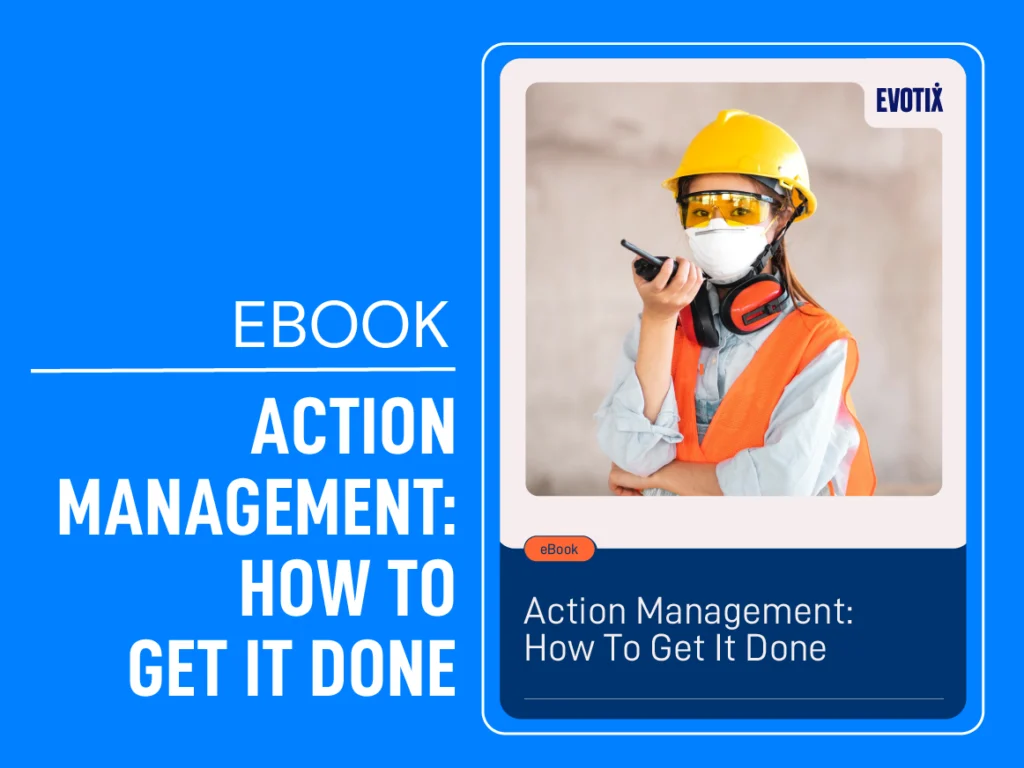
Download our free eBook and take action of your actions.
FAQ
What is action management in health and safety?
Action management refers to the process of identifying, assigning, tracking and completing actions that improve workplace safety and reduce risk. These actions can be preventative, corrective or compliance-driven, and they play a critical role in ensuring issues are properly resolved in a timely manner.
What is the difference between corrective and preventative actions?
Corrective actions address issues after an incident has occurred, focusing on preventing recurrence. Preventative actions are proactive steps taken to reduce or eliminate risk before an incident happens, such as maintenance, training or hazard mitigation. Both are essential parts of action management and maintaining workplace safety.
Why do organizations struggle with action management?
Many organizations struggle because actions are often tracked across spreadsheets, emails or disconnected tools, making them difficult to manage consistently and ensure follow-up. This leads to unclear ownership, missing deadlines and limited visibility into which actions are completed or still outstanding.
What are the key elements of effective action management?
Effective action management requires clear documentation, assigned ownership, defined timelines and ongoing tracking of progress. It also includes validation, such as manager sign-off, to confirm that actions have been completed correctly and delivered the intended outcome.
How does action management fit into incident management and audits?
Action management is the follow-through component of both incident management and audits. Investigations and inspections identify issues, but it is the associated actions that resolve them and prevent future occurrences. Without effective action management, these processes lose much of their value.